


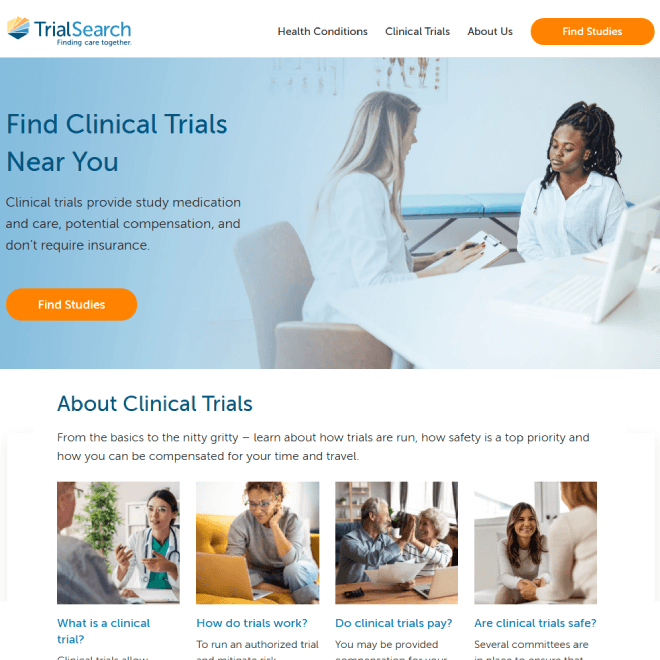
Medical research needs real people. Especially now that AI is assisting the rapid development of modern medicine, we believe the demand for participants to validate the innovations is going to only grow. How it works is pharma firms, universities, and hospitals pay healthy volunteers and patients with certain conditions to participate in clinical research. The pay is real and can genuinely be substantial. This is where TrialSearch comes into play, it is a free aggregator that pulls paid trial listings from research centers across the US and worldwide into one searchable database. They do do not conduct any trials itself, but streamline the research process. Before you read further however, one thing must be said clearly: clinical trials involve real medical procedures and real risk. The compensation reflects that. Read everything before you sign anything or proceed.
Quick Facts
| Platform Name | TrialSearch |
| Earning Potential | Lots but with big risk |
| Typical Duration | Days to months depending on trial |
| Payment Frequency | Per study payment schedule |
| Required Equipment | No equipment but eligibility varies |
What’s Inside
- Is TrialSearch real and safe?
- How hard is it to sign up?
- Can I do this whenever I want?
- How much money can you really make?
- When and how do you get paid?
- What stuff do you need to start?
- Is the work easy or hard?
- The Pros and Cons of TrialSearch
- Final Verdict: Is TrialSearch worth your time?
- Frequently Asked Questions
Is TrialSearch real and safe?
Important: Clinical trials involve real medical interventions including experimental drugs, devices, or procedures. You are not testing a software product. Risks include side effects, adverse reactions, and in rare cases serious medical events. Every legitimate trial is registered with a government body and has an Institutional Review Board (IRB) overseeing it for participant safety. Always verify the trial’s registration number (called an NCT number in the US) before agreeing to participate.
We have written this review on TrialSearch because it is a legitimate free aggregator that is owned / operated by a firm called SubjectWell. We aren’t endorsing clinical trials by any means but would rather you visit legitimate websites as opposed to potential scams. TrialSearch functions exclusively as a third-party informational directory. We at PaidGigs.net have no control over the safety protocols, medical practices, or outcomes of any trial listed on the platform. TrialSearch pull listings from verified research centers and hospital systems, they are not a clinical trial operator. The individual trials it lists are run by pharmaceutical companies, universities, and hospitals that are regulated by the FDA and IRBs. Legitimate trials never charge you to participate and all study-related care is covered at no cost to you.
How hard is it to sign up?
You technically don’t sign up with TrialSearch. Prior to searching, you enter details into a form, search by condition or location, and find trials that match your profile. The results page will show trial listings and almost always includes contact information and screening criteria. You then contact the research team directly to ask about eligibility and schedule a screening visit. That screening is free and by no means are you under any obligation to enroll.
Each trial will have a different screening process. Some are a simple phone call. Others are in-person and very involved by requiring things like blood work, medical history review, physical examination, and multiple visits before you are accepted. The more rigorous the screening, the more you can trust that the trial is being run carefully.
💡 Insider Tip:
You can also set up email alerts on TrialSearch for new trials matching your age, gender, and location so you hear about openings as soon as they post.
Can I do this whenever I want?
Each trial opportunity has a fixed enrollment window combined with specific eligibility requirements and a defined schedule of visits you must attend. You cannot choose when to participate. You apply, get screened and if accepted you commit to the trial’s schedule. Some outpatient studies require one visit per week for a few weeks. Phase I inpatient studies may require you to stay overnight at the facility for multiple days.
Participation is voluntary at every stage. You can withdraw at any time for any reason without penalty. But withdrawing mid-trial may impact compensation. Read the payment schedule in the consent form before you start. This isn’t a casual gig and is should be taken very serious (for many reasons). Do not be scared to ask questions to whomever is conducting the study.
How much money can you really make?
According to our research into the clinical trial industry, reported compensation ranges can be substantial, though all final payment terms are determined solely by the trial sponsor. You will have to look at every study to see what the compensation is. We choose not to go into detail because the effort and risk required to obtain it is real and should be taken very seriously.
When and how do you get paid?
Payment terms are usually spelled out in the informed consent form you sign before the trial begins. Most clinical trials pay per visit or in installments tied to trial milestones. Common methods include prepaid Visa cards, checks, or direct deposit. Ensure you check the individual study you are interested in for all specific details.
What stuff do you need to start?
You need to meet the health criteria for the specific trial you are applying for. You also will need computer or smartphone to search TrialSearch.
Is the work easy or hard?
A better way to phrase it is that the work can be risky. Effort will always vary depending on the exact study you are participating in. Short outpatient studies are low effort. Multi-night inpatient Phase I studies require you to live at a clinical research facility while undergoing regular monitoring, blood draws, and observation. That is different from most gigs on this site.
The Pros and Cons of TrialSearch
| The Pros | The Cons |
|---|---|
| High pay: Can earn thousands, but risky. | Real medical risk: Experimental drugs carry unknown side effects. |
| All care covered: Study-related medical costs are free. | Fixed schedule: You commit to specific visits and dates. |
| Free to search: TrialSearch is a no-cost browsing tool. | Eligibility screening: Not every applicant qualifies. |
Final Verdict: Is TrialSearch worth your time?
Medical Disclaimer: The decision to participate in clinical research is a deeply personal choice that should only be made after thorough consultation with your primary healthcare provider. PaidGigs.net does not recommend or endorse participation in any specific clinical trial.If you are interested in this method of earning, by all means do your proper research and decide for yourself. Just be aware, as we have said throughout this review, there are real risks with clinical trials and you need to be vividly clear about what you are getting involved in regardless of payout.
The Bottom Line: This is a personal choice with risk. All we can say is verify the NCT number. Read the consent form in full before signing. Ask the research team every question you have before you commit. The pay is real. So is the responsibility to understand what you are participating in.
Frequently Asked Questions
Every legitimate US clinical trial is registered with ClinicalTrials.gov and has an NCT number. Look for this number in the listing or ask the research team for it. You can verify the trial exists at clinicaltrials.gov using that number. Legitimate trials will also have an IRB approval number and a named principal investigator at a verifiable institution. No legitimate trial charges you to participate.
Most trials explicitly prohibit participation in other studies at the same time because concurrent treatments can interfere with results and create unknown health risks. You are required to disclose any recent trial participation during screening. Some trials require a washout period of weeks or months after another study before you are eligible. Always disclose fully and honestly.
The informed consent form is a legally required document that explains in plain language what the study involves, what risks and discomforts may occur, what your rights as a participant are, how you will be paid, and how you can withdraw. You must read it carefully and ask questions about anything unclear before signing. You are never obligated to participate just because you went through screening.
Phase I trials test experimental treatments in humans for the first time. They are carefully designed with safety monitoring and dose escalation to minimize risk, but adverse events do occur. The compensation reflects the fact that there is genuine uncertainty. Most participants in well-run Phase I studies complete without serious events, but you should read about the specific drug or device being tested and ask the research team about any known risks before agreeing.
Yes. Clinical trial payments are taxable income. The research team should provide you with a 1099 if your total compensation reaches the IRS reporting threshold. Keep records of all payments received. Self-employment tax rules do not apply to clinical trial compensation since you are a research participant, not a contractor, but the income still gets reported on your return.