


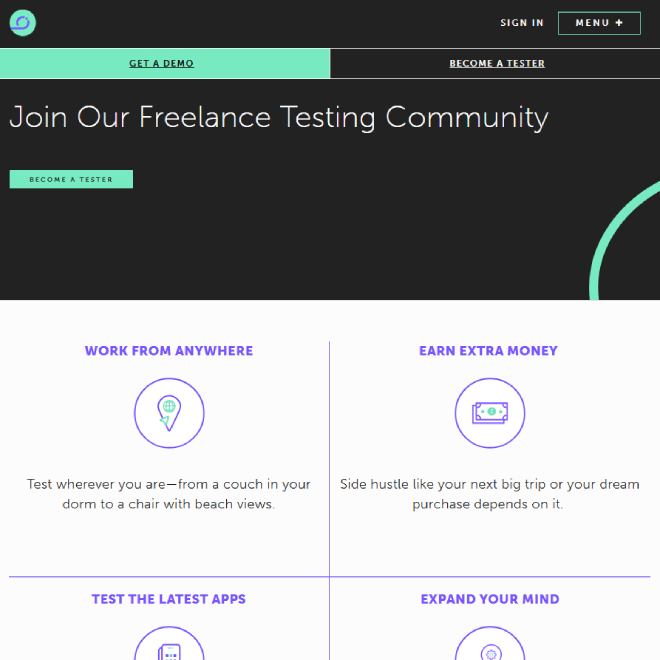
Software is entering a new age with AI assisted development and innovations happening what seems every month. This has fueled growth for app testing companies, who pay good money to find out their software is broken before customers do. One such company is Test IO which is a platform that connects companies with testers who they pay to identify bugs and report issues. If you have a keen eye for detail and the patience to write clear bug reports, this gig is interesting and in a vertical that continues to grow.
Quick Facts
| Platform Name | Test IO |
| Earning Potential | Per approved bug |
| Typical Duration | Project-based with deadlines |
| Payment Frequency | Monthly |
| Required Equipment | Smartphone or Desktop |
What’s Inside
- Is Test IO real and safe?
- How hard is it to sign up?
- Can I do this whenever I want?
- How much money can you really make?
- When and how do you get paid?
- What stuff do you need to start?
- Is the work easy or hard?
- The Pros and Cons of Test IO
- Final Verdict: Is Test IO worth your time?
- Frequently Asked Questions
Is Test IO real and safe?
Test IO is a real app testing company that connects businesses with freelance testers to find bugs in apps, websites, and software before launch. Headquartered in Germany, the company allows for US testers and has solid reviews from both G2 and Glassdoor based upon our research. Based on our research of contributor feedback, reports indicate that payments are issued reliably according to the company’s stated schedule. The most consistent complaints are about some team leaders being inconsistent in their feedback and the slow advancement prior to unlocking higher paying projects.
How hard is it to sign up?
Joining the service is very beginner friendly to sign up to as you will register with your name, email, country, and device list. Following this you participate in an onboarding test session that covers both the testing basics and bug reporting. It’s quite involved as process takes around three days to complete. While there is no prior testing experience required, it is tough for anyone without some solid experience and technical knowhow to earn meaningful money. The good news is they have an Academy for newbies with free courses on testing techniques, which are worth completing.
💡 Insider Tip:
Always check the already-submitted bugs list before submitting your own. Test IO does not pay for duplicate bugs.
Can I do this whenever I want?
Test cycles have deadlines and you must work within the provided timelines. So while you can still do this gig on your own schedule, it must be within the provided window. Essentially when a project opens that matches your profile and devices you will apply to join. If accepted, you will have a window of time to find and report bugs before it closes. Your device profile, ranking and activity level all affect how many invitations you receive.
How much money can you really make?
Everything is tied to performance, meaning you are paid per approved bug you find. The severity of the bug you identify directly impacts the amount you are paid. Logically, low severity ones only pay a few dollars where as bugs deemed critical can pay far more.
As a new tester you will have a basic badge which means your access to projects will be limited early on. As you gain experience not only will you unlock more opportunity but research suggests that earnings potential typically increases as testers gain experience and unlock higher-tier projects. We did read reports on Glassdoor that show a VERY high an average monthly figure (almost $5,000) but we are incredibly skeptical of this and believe it is for the top 1% of testers on the platform. As a new tester you should expect modest earnings for the first few months.
When and how do you get paid?
The payout is monthly, specifically occurring on the 11th of each month for earnings generated from the month prior. This is a fully automatic process and there is no minimum balance to accrue or action needed on your end. When you sign up you can select either PayPal, Payoneer or Wise and provide the relevant information so you are all set. It’s a set it and forget it system (unless you need to make changes).
What stuff do you need to start?
You need either a smartphone or desktop computer to become a tester, having both is beneficial! Registering more devices on your profile opens more test cycles because clients want testers on specific platforms. For mobile you will download a Test IO app whereas desktop operates in a web browser. No additional special equipment is needed.
Is the work easy or hard?
Navigating the Test IO software to identify and apply for tasks is easy as it is very user friendly. Where the challenge presents itself is when you are writing reports completely encompass the bugs that you find. Test IO clients want details, lots of them. We’re talking bug reports with clear steps on how to reproduce the bugs including screenshots and even screen recordings. If you don’t put in this level of effort your bug submission has a high probability of being rejected, meaning you do not get paid.
The Test IO Academy courses teach you the format, so don’t worry too much. It is just essential reading them before your first project if you want success. The feedback loop is slow on some projects. When you get unclear feedback on a rejection the Test IO Discord community is a solid resource to lean on and learn from.
The Pros and Cons of Test IO
| The Pros | The Cons |
|---|---|
| Payments always on time: Automatic on the 11th, no minimum. | Slow start: New testers earn little before ranking builds. |
| Beginner-friendly: Academy teaches you everything. | No duplicate pay: Finding a reported bug earns you nothing. |
| Active community: Discord channel and free learning events. | Inconsistent feedback: Some team leaders better than others. |
Final Verdict: Is Test IO worth your time?
App testing, including Test IO is ultimately worth joining if you have some technical knowledge and gritty personality to provide the details. They tend to have better tester support and a more active community than others. The other bonus is that payments are automatic and reliable. The onboarding is real preparation, not a hoop to jump through so if you have that expectation from day one this is a solid gig to try.
The Bottom Line: If you are comfortable treating the first two months as an investment into learning and understanding how to succeed via the Academy, the potential earnings for experienced testers can make it a worthwhile side hustle.
Frequently Asked Questions
Most testers complete it in one to three days. The onboarding covers testing principles and bug reporting format through a practical test. It is not quick, but it is useful. Testers who spend time on it report better initial acceptance rates on their first real project compared to those who rush through it.
Reproducible steps that another person could follow exactly, a clear title that names the feature and the problem, screenshots or a screen recording, the device and software version you tested on, and a severity rating that matches the actual impact of the issue.
Yes. Many testers work across multiple app testing platforms to smooth out the gap periods between active cycles.
Higher-ranked testers get priority access to more projects, including enterprise clients who pay more per approved bug. Ranking rises based on the quality and acceptance rate of your bug reports across completed cycles.
Yes. Test IO pays you as an independent contractor and nothing is withheld. You receive the full bug payout and report it yourself at tax time.Keep a record of every monthly payment and the date it was received.